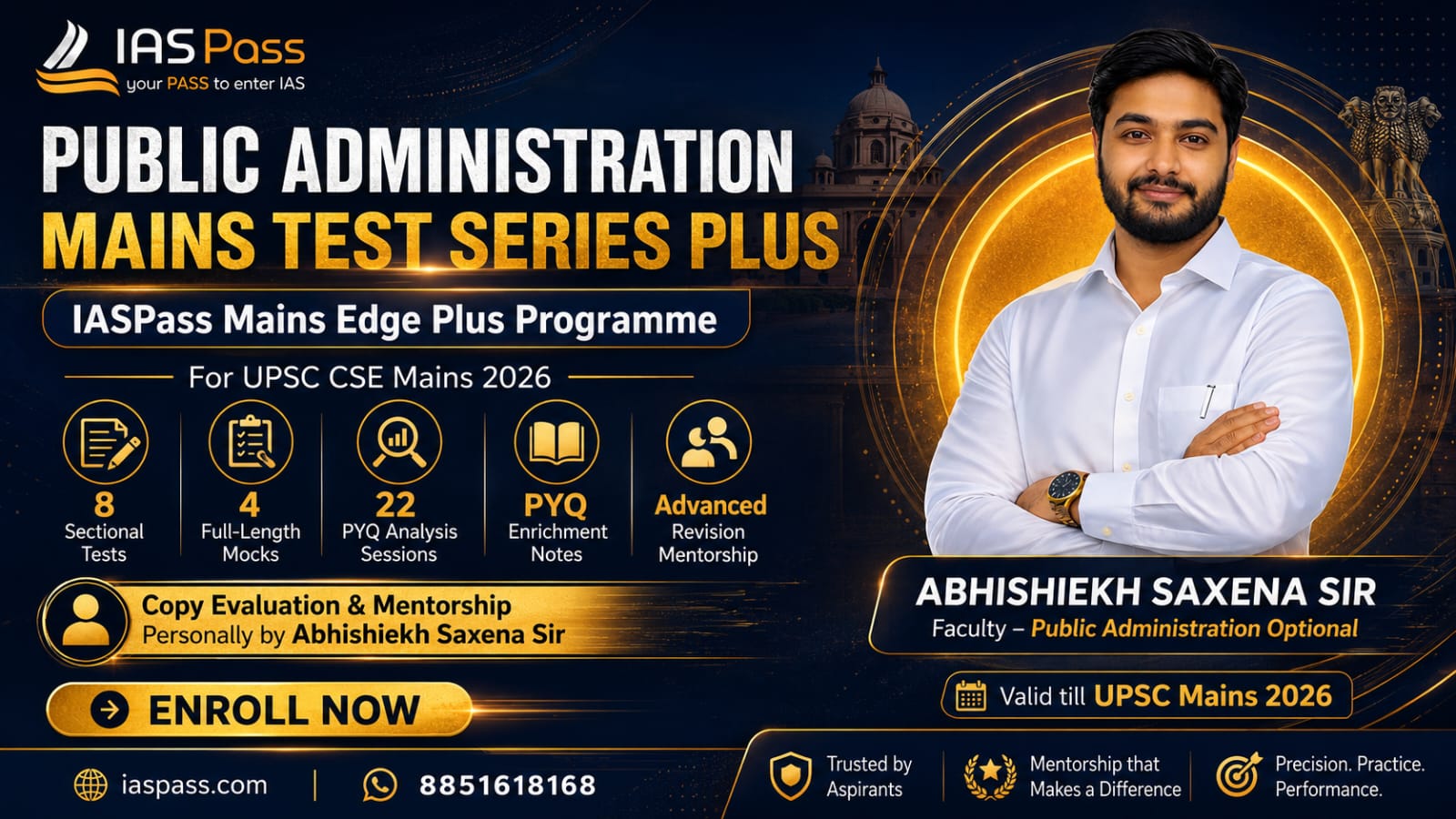
Public Administration Mains Test Series Plus
A complete Public Administration Optional Mains 2026 programme with 8 sectional tests, 4 full-length mocks, 22 PYQ analysis sessions, PYQ enrichment notes, advanced revision mentorship sessions, and copy evaluation personally by Abhishiekh Saxena Sir.
Choose Your Plan
Select the perfect pricing option that fits your needs
24/7 Support
Flexible Learning
Course Highlights
Detailed Test Coverage
Test 1: Introduction + Accountability and Control
Introduction
Meaning, Scope and Significance of Public Administration; Wilson’s Vision of Public Administration; Evolution of the discipline and its present status; New Public Administration; Public Choice Approach; Challenges of Liberalisation, Privatisation and Globalisation; Good Governance: Concept and Application; New Public Management.
Accountability and Control
Concepts of Accountability and Control; Legislative, Executive and Judicial Control over Administration; Citizen and Administration; Role of Media, Interest Groups and Voluntary Organisations; Civil Society; Citizens’ Charters; Right to Information; Social Audit.
Test 2: Administrative Thought + Organisations + Personnel Administration
Administrative Thought
Scientific Management and Scientific Management Movement; Classical Theory; Weber’s Bureaucratic Model, critique and post-Weberian developments; Dynamic Administration of Mary Parker Follett; Human Relations School; C.I. Barnard; Herbert Simon’s Decision-Making Theory; Participative Management including Likert, Argyris and McGregor.
Organisations
Systems Theory; Contingency Theory; structure and forms of organisations; ministries and departments; corporations, companies, boards and commissions; ad hoc and advisory bodies; headquarters and field relationships; regulatory authorities; public-private partnerships.
Personnel Administration
Human resource development; recruitment; training; career advancement; position classification; discipline; performance appraisal; promotion; pay and service conditions; employer-employee relations; grievance redressal mechanism; code of conduct; administrative ethics.
Test 3: Administrative Behaviour + Administrative Law + Public Policy + Techniques
Administrative Behaviour
Decision-making process and techniques; communication; morale; motivation theories; theories of leadership.
Administrative Law
Meaning, scope and significance; Dicey on administrative law; delegated legislation; administrative tribunals.
Public Policy
Models of policy-making and their critique; processes of conceptualisation, planning, implementation, monitoring, evaluation and review; limitations; state theories and public policy formulation.
Techniques of Administrative Improvement
Organisation and Methods; Work Study and Work Management; e-Governance and Information Technology; management aid tools such as Network Analysis, MIS, PERT and CPM.
Test 4: Comparative Public Administration + Development Dynamics + Financial Administration
Comparative Public Administration
Historical and sociological factors affecting administrative systems; administration and politics in different countries; current status of Comparative Public Administration; ecology and administration; Riggsian models and their critique.
Development Dynamics
Concept of development; changing profile of development administration; anti-development thesis; bureaucracy and development; strong state versus market debate; impact of liberalisation on administration in developing countries; women and development; self-help group movement.
Financial Administration
Monetary and fiscal policies; public borrowings and public debt; budgets — types and forms; budgetary process; financial accountability; accounts and audit.
Test 5: Evolution of Indian Administration + Constitutional Framework + PSUs
Evolution of Indian Administration
Kautilya’s Arthashastra; Mughal administration; legacy of British rule in politics and administration; Indianisation of public services; revenue administration; district administration; local self-government.
Philosophical and Constitutional Framework of Government
Salient features and value premises; constitutionalism; political culture; bureaucracy and democracy; bureaucracy and development.
Public Sector Undertakings
Public sector in modern India; forms of public sector undertakings; problems of autonomy, accountability and control; impact of liberalisation and privatisation
Test 6: Financial Management + Plans and Priorities + Administrative Reforms
Financial Management
Budget as a political instrument; parliamentary control of public expenditure; role of Finance Ministry in monetary and fiscal areas; accounting techniques; audit; role of Controller General of Accounts and Comptroller and Auditor General of India.
Plans and Priorities
Machinery of planning; role, composition and functions of Planning Commission and National Development Council; indicative planning; process of plan formulation at Union and State levels; Constitutional Amendments of 1992 and decentralised planning for economic development and social justice.
Administrative Reforms since Independence
Major concerns; important committees and commissions; reforms in financial management and human resource development; problems of implementation.
Test 7: Union, State, Civil Services and Significant Issues
Union Government and Administration
Executive, Parliament and Judiciary — structure, functions and work processes; recent trends; intragovernmental relations; Cabinet Secretariat; Prime Minister’s Office; Central Secretariat; ministries and departments; boards; commissions; attached offices; field organisations.
State Government and Administration
Union-State administrative, legislative and financial relations; role of Finance Commission; Governor; Chief Minister; Council of Ministers; Chief Secretary; State Secretariat; Directorates.
Civil Services
Constitutional position; structure; recruitment; training and capacity-building; good governance initiatives; code of conduct and discipline; staff associations; political rights; grievance redressal mechanism; civil service neutrality; civil service activism.
Significant Issues in Indian Administration
Values in public service; Regulatory Commissions; National Human Rights Commission; problems of administration in coalition regimes; citizen-administration interface; corruption and administration; disaster management.
Test 8: District Administration + Rural + Urban + Law and Order
District Administration since Independence
Changing role of the Collector; Union-State-local relations; imperatives of development management and law and order administration; district administration and democratic decentralisation.
Rural Development
Institutions and agencies since independence; rural development programmes; foci and strategies; decentralisation and Panchayati Raj; 73rd Constitutional Amendment.
Urban Local Government
Municipal governance; main features, structure, finance and problem areas; 74th Constitutional Amendment; global-local debate; new localism; development dynamics, politics and administration with special reference to city management.
Law and Order Administration
British legacy; National Police Commission; investigative agencies; role of central and state agencies including paramilitary forces in maintenance of law and order and countering insurgency and terrorism; criminalisation of politics and administration; police-public relations; police reforms.
Test 9: Mock 1
Full-length Mock Test – Paper I
Test 10: Mock 2
Full-length Mock Test – Paper II
Test 11: Mock 3
Full-length Mock Test – Paper I
Test 12: Mock 4
Full-length Mock Test – Paper II
22 PYQ Analysis Sessions
Complete Paper I and Paper II PYQ Coverage
The programme includes 22 PYQ Analysis Sessionscovering the complete Public Administration Optional syllabus.
These sessions are designed to help students understand Public Administration through UPSC’s actual demand.
What These Sessions Will Help You Decode
· Which themes are repeatedly asked by UPSC
· How questions are framed from each unit
· How conceptual topics become analytical questions
· How thinkers are used in answer writing
· How Paper I concepts help explain Paper II issues
· How to identify the central demand of questions
· How to enrich answers using scholars, committees and examples
· How to avoid generic GS-style writing in optional answers
Why IASPass Public Administration Mains Test Series Plus Is Different
Ordinary Test Series vs IASPass Mains Test Series Plus
|
Ordinary Pub Ad Test Series |
IASPass Public Administration Mains Test Series Plus |
|
Only tests student preparation |
Combines tests, PYQ analysis, notes and mentorship |
|
Limited to answer writing |
Builds answer-writing, revision and conceptual linkage |
|
PYQs are used only indirectly |
22 dedicated PYQ analysis sessions |
|
Feedback is often generic |
Copy evaluation personally by Abhishiekh Saxena Sir |
|
Mentorship is often standardised |
Advanced Revision Mentorship Sessions personally guided by Abhishiekh Saxena Sir |
|
Revision is left to students |
PYQ enrichment notes and advanced revision mentorship |
|
Tests are treated as marksheets |
Tests are used as improvement tools |
|
Paper I and Paper II remain separate |
Emphasis on Paper I–Paper II integration |
|
Focus on completion |
Focus on performance improvement before Mains |
Who Should Join?
This programme is ideal for:
· UPSC CSE Mains 2026 aspirants with Public Administration Optional
· Students who have completed or are close to completing the syllabus
· Aspirants who want structured sectional answer-writing practice
· Students who want full-length Paper I and Paper II mocks
· Aspirants who struggle to decode PYQs
· Students who know thinkers but cannot use them well in answers
· Aspirants who write GS-style answers in Public Administration
· Repeaters who want better optional scores
· Students who want personal copy evaluation by Abhishiekh Saxena Sir
· Aspirants who want advanced revision mentorship before Mains 2026
Final CTA Section
Join Public Administration Mains Test Series Plus
IASPass Mains Edge Plus Programme for UPSC CSE Mains 2026
Do not prepare Public Administration through random tests and scattered revision.
Prepare through a structured system of:
Sectional Tests → Mock Tests → PYQ Analysis → Enrichment Notes → Advanced Revision Mentorship → Personal Evaluation
Course Features
Main Positioning Section
Not Just a Test Series. A Complete Pub Ad Mains Performance Programme.
Most test series only test what you know.
But Public Administration Optional requires more than testing. It requires:
· understanding UPSC’s question pattern,
· decoding recurring PYQ themes,
· using thinkers and concepts meaningfully,
· improving optional-specific answer structure,
· connecting Paper I theory with Paper II administration,
· and correcting mistakes through expert mentorship.
Public Administration Mains Test Series Plusis built around this need.
It gives students a complete preparation cycle:
Analyse PYQs → Write Tests → Get Evaluated → Revise with Mentorship → Improve Answers
The base test structure follows the Public Administration Mains Test Series model of 12 tests — 8 sectional tests and 4 mock tests, covering Paper I and Paper II, followed by full-length mocks. The Plus version adds 22 PYQ analysis sessions, PYQ enrichment notes, advanced revision mentorship sessions and personal evaluation by Abhishiekh Saxena Sirfor UPSC CSE Mains 2026.
Why This Programme Matters
Why Public Administration Optional Needs a Guided Test Series
Public Administration is a scoring optional only when students know how to write answers in the language of the subject.
Many aspirants face these problems:
· They know thinkers but cannot use them effectively in answers.
· They read topics but do not understand how UPSC frames questions.
· Their answers become GS-like instead of optional-specific.
· They fail to connect Paper I concepts with Paper II examples.
· They write descriptive answers instead of analytical answers.
· They lack expert feedback on copies.
· They do not revise through PYQ-linked themes.
· They repeat the same mistakes because they do not receive subject-specific mentorship.
This programme solves these problems through a combination of sectional tests, mock tests, PYQ analysis, enrichment notes, advanced revision mentorship and personal copy evaluation by Abhishiekh Saxena Sir.
Programme Framework
The IASPass Mains Edge Plus Framework
1. Test
Write sectional and full-length tests based on the complete Public Administration syllabus.
2. Analyse
Attend PYQ analysis sessions to understand how UPSC frames questions from each unit.
3. Evaluate
Get your copies evaluated personally by Abhishiekh Saxena Sirwith improvement-oriented feedback.
4. Enrich
Use PYQ analysis enrichment notes to improve content, examples, thinkers, committees and answer dimensions.
5. Revise with Mentorship
Attend Advanced Revision Mentorship Sessionsto revise high-value themes, correct recurring mistakes, improve answer strategy and prepare better for Mains 2026.
6. Improve
Use test feedback, PYQ insights, enrichment notes and mentorship guidance to improve answer quality.
Programme Deliverables
What You Will Get
1. Sectional Tests
You will get 8 sectional testscovering the complete Public Administration Paper I and Paper II syllabus.
These tests will help you:
· revise the syllabus in a structured manner,
· practise unit-wise answer writing,
· identify weak areas,
· improve conceptual application,
· build answer-writing discipline,
· and prepare gradually for full-length mocks.
2. Full-Length Mock Tests
You will get 4 full-length mock testsfor final exam simulation.
These mocks will help you:
· practise complete Paper I and Paper II writing,
· improve time management,
· build exam temperament,
· test overall optional readiness,
· and prepare for actual UPSC Mains conditions.
3. 22 PYQ Analysis Sessions
The programme includes 22 PYQ Analysis Sessionscovering the complete Public Administration Paper I and Paper II syllabus.
These sessions will help you understand:
· how UPSC frames questions,
· which themes are repeatedly asked,
· how questions evolve across years,
· how thinkers and concepts should be used,
· how Paper I and Paper II can be interlinked,
· how to identify the central demand of a question,
· and what kind of answers UPSC expects.
4. PYQ Analysis Enrichment Notes
You will receive PYQ Analysis Enrichment Notesto support revision and answer writing.
These notes will help you revise:
· recurring PYQ themes,
· important dimensions,
· scholar-based value additions,
· administrative examples,
· committee and commission references,
· Paper I–Paper II linkages,
· and answer-ready frameworks.
5. Advanced Revision Mentorship Sessions
Advanced Revision Mentorship Sessionscombine revision, strategy and mentorship into one guided improvement format.
These sessions will focus on:
· high-probability themes,
· inter-unit linkages,
· scholar-to-topic connections,
· Paper I–Paper II integration,
· contemporary administrative examples,
· answer enrichment,
· recurring mistakes seen in tests,
· content prioritisation,
· revision strategy,
· test performance improvement,
· and final Mains preparation direction.
These sessions will help students revise not mechanically, but strategically — with a focus on converting preparation into better optional answers.
6. Copy Evaluation Personally by Abhishiekh Saxena Sir
This is one of the strongest features of the programme.
Copies will be evaluated personally by Abhishiekh Saxena Sir, so that feedback remains subject-specific, meaningful and improvement-oriented.
Every evaluated copy will not be treated as a routine score sheet. The focus will be on helping students understand:
· whether the central demand has been addressed,
· whether the answer is optional-specific,
· whether thinkers and concepts are used properly,
· whether the structure is clear,
· whether examples and committees are relevant,
· whether Paper I–Paper II linkages are being used,
· whether the answer has analytical depth,
· and what exactly needs to improve in the next answer.
The reference test-series brochure also emphasises answer writing, copy evaluation, personalised mentorship, discussion after tests, model answer hints, and pre-test/post-test mentorship as part of the test-series ecosystem.
7. Mentorship Personally by Abhishiekh Saxena Sir
Mentorship will be personally provided by Abhishiekh Saxena Sir.
The mentorship focus will be:
· answer-writing improvement,
· conceptual clarity,
· better use of thinkers,
· Paper I–Paper II linkage,
· correction of recurring weaknesses,
· prioritisation of high-yield themes,
· and final preparation strategy for Mains 2026.
This makes the programme different from generic test series where evaluation is often mechanical and feedback remains superficial.
8. Detailed Model Answer Hints
Detailed model answer hints will be provided to help students compare their answers with expected content, structure, dimensions and presentation.
These hints will help students improve:
· introduction framing,
· body structuring,
· conceptual depth,
· thinker usage,
· examples,
· committees and reports,
· Paper I–Paper II linkage,
· and conclusion quality.
Course Details Table
|
Detail |
Information |
|
Course Name |
Public Administration Mains Test Series Plus |
|
Branding |
IASPass Mains Edge Plus Programme |
|
Subject |
Public Administration Optional |
|
Target Exam |
UPSC CSE Mains 2026 |
|
Faculty |
Abhishiekh Saxena Sir |
|
Sectional Tests |
8 |
|
Mock Tests |
4 |
|
Total Tests |
12 |
|
PYQ Sessions |
22 PYQ Analysis Sessions |
|
Notes |
PYQ Analysis Enrichment Notes |
|
Additional Sessions |
Advanced Revision Mentorship Sessions |
|
Evaluation |
Copy Evaluation personally by Abhishiekh Saxena Sir |
|
Mentorship |
Mentorship personally by Abhishiekh Saxena Sir |
|
Validity |
Valid till UPSC Mains 2026 |
|
Fee |
₹9999 |
|
Batch Starts |
3rd June |
|
Mode |
Online |
Test Schedule
Public Administration Mains Test Schedule
The schedule follows the same sectional and mock-test structure as the reference test series, but without individual test dates so that the programme remains flexible across batches. The original reference structure covers Paper I, Paper II and four full mocks.
|
Test |
Paper / Focus |
Syllabus Coverage |
|
Test 1 |
Paper I |
Introduction; Accountability and Control |
|
Test 2 |
Paper I |
Administrative Thought; Organisations; Personnel Administration |
|
Test 3 |
Paper I |
Administrative Behaviour; Administrative Law; Public Policy; Techniques of Administrative Improvement |
|
Test 4 |
Paper I |
Comparative Public Administration; Development Dynamics; Financial Administration |
|
Test 5 |
Paper II |
Evolution of Indian Administration; Philosophical and Constitutional Framework of Government; Public Sector Undertakings |
|
Test 6 |
Paper II |
Financial Management; Plans and Priorities; Administrative Reforms since Independence |
|
Test 7 |
Paper II |
Union Government and Administration; State Government and Administration; Civil Services; Significant Issues in Indian Administration |
|
Test 8 |
Paper II |
District Administration since Independence; Rural Development; Urban Local Government; Law and Order Administration |
|
Test 9 |
Mock |
Mock 1 – Paper I |
|
Test 10 |
Mock |
Mock 2 – Paper II |
|
Test 11 |
Mock |
Mock 3 – Paper I |
|
Test 12 |
Mock |
Mock 4 – Paper II |
Frequently Asked Questions
Everything you need to know
Related Courses
You might also be interested in
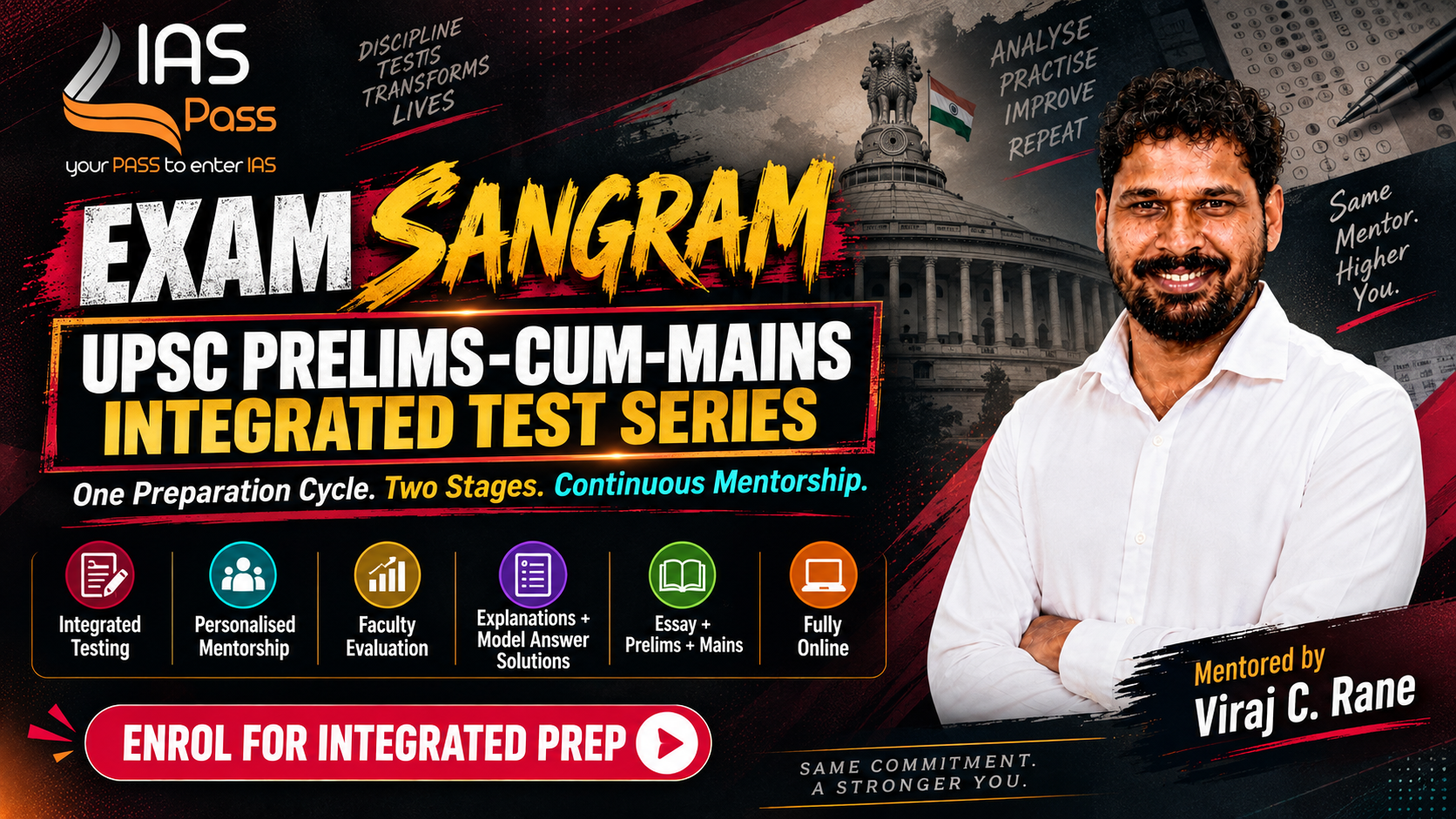
Exam Sangram 2027 – UPSC Prelims-cum-Mains Integrated Test Series
Exam Sangram 2027 is a UPSC Prelims-cum-Mains Integrated Test Series designed to...
View Details →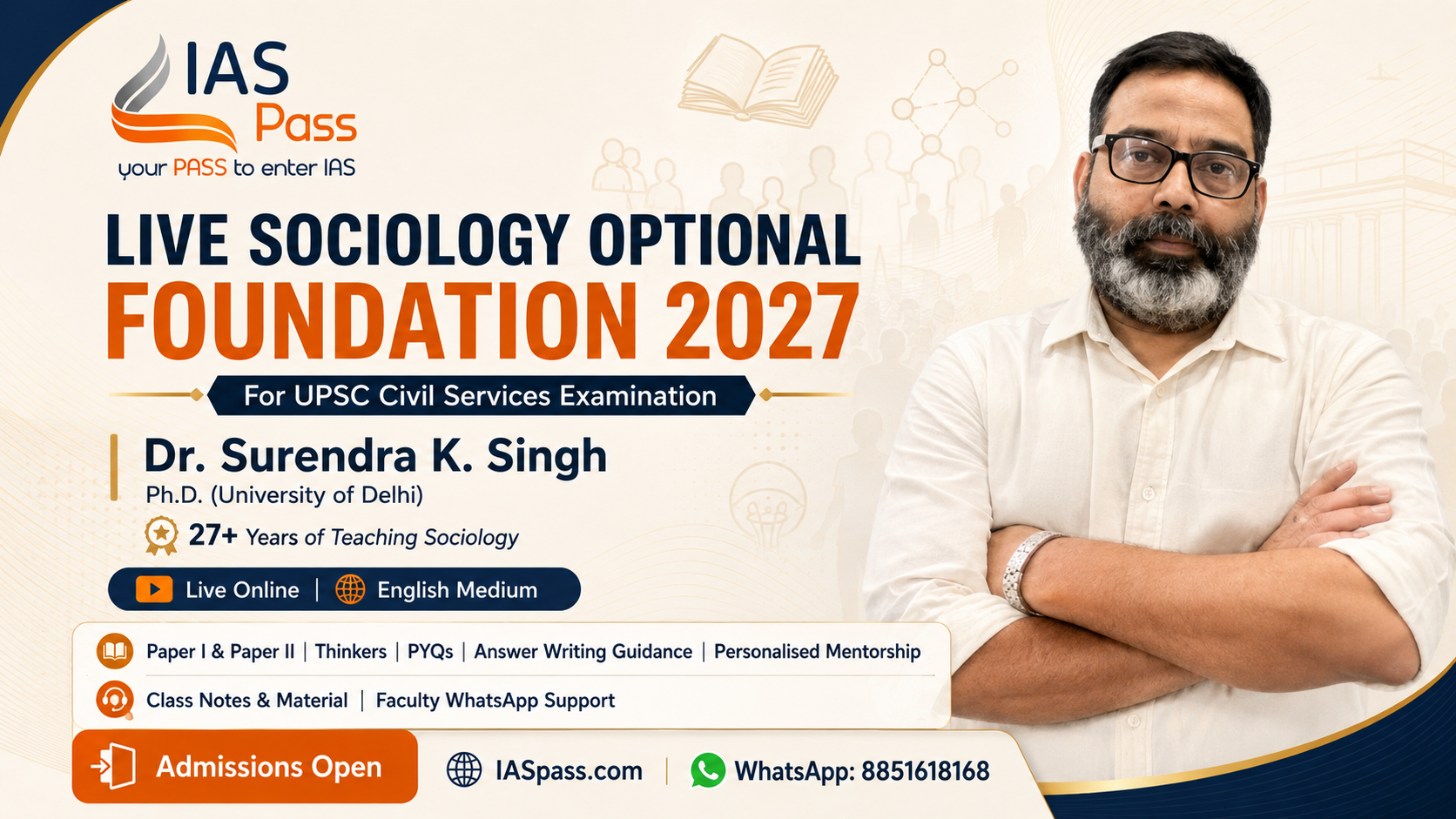
Sociology Optional Foundation 2027 | UPSC CSE | Dr. Surendra K. Singh
Sociology Optional Foundation Course for UPSC CSE 2027 with Dr. Surendra K. Sing...
View Details →
Answer Writing Edge
Learn the art of UPSC Mains answer writing through 5 conceptual sessions, 21 day...
View Details →